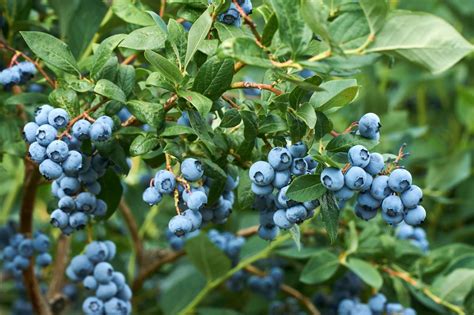
The Color Blue in Nature
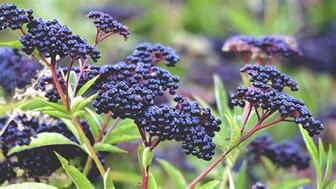 Elderberries
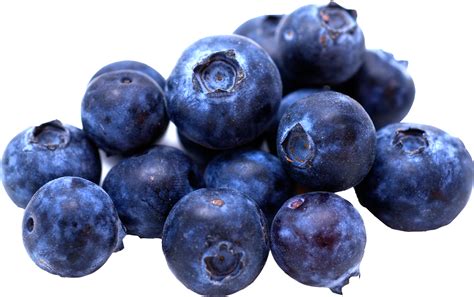
 Our blueberry bushes are almost ready to be picked, and I have to admit that I am looking forward to it, because they are just delicious. These bushes were here already when we bought the house, over thirty years ago. Later we discovered wild blueberries up the hill. Although wild blueberries are smaller, their taste is different; they are tangy and sweeter. I do not care really, I just love them. When you open up one of those little berries you realize that they are not really blue inside but a deep purple, just like elderberries.
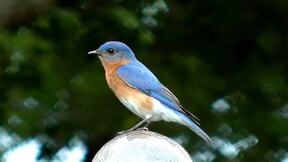 Eastern Bluebird
 The color blue is rare in nature. It is true that once in a while I see a blue bird and I get all excited, but in general the color blue is not as abundant as for example red or yellow or brown. Of course the red cardinal is eye-catching and the Baltimore Oriole is trying to outdo him. Their females however have the same markings but in a muted, beige-brownish hue. So I was wondering what the reason behind this could be.
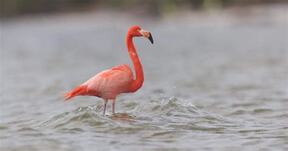
Most of the color pigments are not made in our bodies. The diet of the animals supports them making those pigments. Take the flamingos for example. After consuming blue-green algae and shrimp, they turn from their drab gray color to a delightful pink.
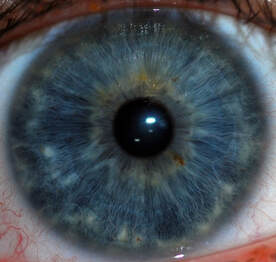 Blue eye strructure
 So how do birds or butterflies get their blue color? Well, there is not a unique path in nature to get to the color blue. The Blue Jay's feathers for example, have a microscopic bead design at the surface, from which only blue wavelength light is able to escape. The blues in peacock feathers work with microscopic lamellae (thin membranes) in the feathers to achieve the same result. Researching the whole subject, I learned that in humans, the blue eyes are based on the microscopic structures in the irises, and not on pigments.
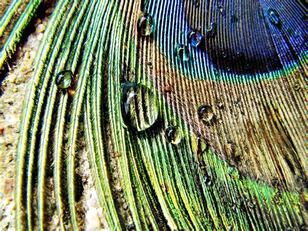
Closeup of a peacock feather
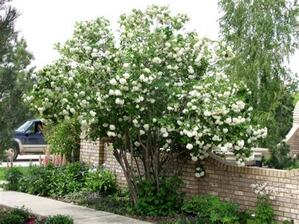 Viburnum Bush
 Big, leafy viburnum bushes- common in the U.S., yield shiny, brilliantly blue fruit. Curious scientists only recently discovered that viburnum’s blue fruit is actually the result of a phenomenon called ‘structural color’, not pigmentation!
The appearance of the color blue is due to the microscopic structure and a concept called interference of light, when two rays of light collide. In the case of the color blue, the two light rays allow us to see the blue color. In the case of viburnum fruit, it is from the stacking of thin layers of fat molecules. It is believed that this shiny blue color is an evolutionary adaptation to attract birds to eat them and thus aid in the spread of the viburnum’s seeds.
The appearance of the color blue is due to the microscopic structure and a concept called interference of light, when two rays of light collide. In the case of the color blue, the two light rays allow us to see the blue color. In the case of viburnum fruit, it is from the stacking of thin layers of fat molecules. It is believed that this shiny blue color is an evolutionary adaptation to attract birds to eat them and thus aid in the spread of the viburnum’s seeds.
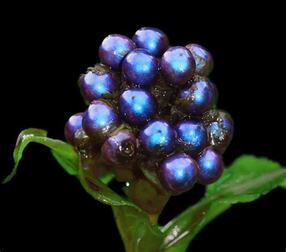 African Pollia
 But an even more amazing- and inedible by the way, example of structural color, is the spectacular iridescence of the African pollia plant berries. Although smaller than blueberries, they stand out in the forest by being incredibly, luminously blue, despite their skins having NO pigments whatsoever. They are the most reflective living things on the planet at 30% reflectivity of light! They accomplished this feat by coiling their cells in a peculiar tight twist, that is formed in sheets like an onion, and absorbing all the light waves except blue- which get reflected back out at near 90%. They also manage to maintain a tiny percentage of some cells that will reflect other colors, which gives them the almost shimmering glow that attracts the eyes.
So if they are inedible you may ask, why are they so brightly colored? As it turns out, it is a different evolutionary strategy. They are attractive as baubles to various animals that will decorate their nests or breeding patches to attract mates, thereby spreading the seeds.
So if they are inedible you may ask, why are they so brightly colored? As it turns out, it is a different evolutionary strategy. They are attractive as baubles to various animals that will decorate their nests or breeding patches to attract mates, thereby spreading the seeds.
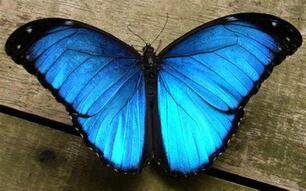 Blue butterfly
 There is only one butterfly that is known to produce a blue pigment. It is the Olive Wing Butterfly. Very little has been known about this butterfly and how it produces the pigment but the scientists are working on it.
The lack of blue as a pigment is also seen in the plant world. Plants use a red pigment called anthocyanin for their blue color. Plants mix anthocyanin with other pigments to produce the color blue. Evolution was not able to develop a process for blue pigments for every organism, but was nevertheless able to produce a blue effect.
The lack of blue as a pigment is also seen in the plant world. Plants use a red pigment called anthocyanin for their blue color. Plants mix anthocyanin with other pigments to produce the color blue. Evolution was not able to develop a process for blue pigments for every organism, but was nevertheless able to produce a blue effect.
Coming back to my blueberries. Blueberries are known to be high in antioxidants, which are good for the human body; the anthocyanins are thought to be useful for combating inflammation. A good rule to follow is, the darker the berry, the more anthocyanins are present; the anthocyanins in the flesh and the skin are water soluble and will turn teeth, lips and tongue blue! Children in particular find this great fun.
 RSS Feed